 Client Login
Why Purchase a Luxury Residence in Miami, Fort...
September 19th, 2026


History, Culture, Lifestyle, Nature & Real Estate
in One of South Florida’s Most Beloved Cities
Chapter One
Long before Delray Beach became synonymous with turquoise water, swaying palms, and the quiet luxury of South Florida living, it was a stretch of subtropical wilderness that only the most determined settlers dared to call home. The story of Delray Beach is one of resilience, reinvention, and a steady, irreversible ascent toward becoming one of the most desirable communities on the Atlantic coastline. Understanding that history is not merely an academic exercise — it is the essential foundation for appreciating why so many people today, guided by trusted advisors like Bernard Poirier, choose to invest their futures here.
The land that would become Delray Beach was originally home to the Jeaga and Tequesta peoples, indigenous nations who lived along Florida’s southeastern coast for thousands of years before European contact. These early inhabitants understood the rhythms of the land deeply — the seasonal flooding of the Everglades to the west, the bounty of the Atlantic to the east, and the rich subtropical ecology that sustained communities long before any city was imagined. Their legacy, while often overlooked in popular histories of the region, forms the deepest layer of the place’s identity.
European settlers first began arriving in earnest in the late nineteenth century. In 1895, a post office was formally established in the area, giving the nascent community its first real administrative identity. The name “Delray” is believed to have been suggested by a Michigan postmaster who was inspired by a neighborhood in Detroit, while “Beach” was added later to reflect the community’s coastal character. This layering of names from elsewhere onto Florida soil was hardly unusual for the era — South Florida was being settled by dreamers from across the country and the world, each one importing fragments of where they came from into the new landscape.
Agriculture defined the early economy. Pineapples, tomatoes, and beans were among the first cash crops cultivated in the region’s sandy, well-drained soil. Japanese farmers, who arrived in the early twentieth century, played a particularly significant role in shaping the agricultural identity of the area. Their influence is still celebrated today at the Morikami Museum and Japanese Gardens, a world-class cultural institution that preserves and shares the legacy of the Yamato Colony, a group of Japanese pioneers who settled in what is now Boca Raton and Delray Beach. It is a remarkable and often surprising piece of local history — that this coastal Florida city carries within it a living thread of Japanese heritage.
By the 1920s, the great Florida land boom had transformed much of South Florida into a speculative frenzy. Delray Beach grew rapidly during this period, adding hotels, civic buildings, and the infrastructure of a proper town. The inevitable bust of 1926, followed by the Great Depression and a devastating hurricane season, tested the community’s resolve. But Delray Beach endured, as it always has, by anchoring itself in the genuine value of its land, its location, and its people rather than in the ephemeral excitement of speculation.
Post-World War II growth brought new residents southward in search of warmth, opportunity, and a fresh start. Delray Beach incorporated as a city in 1927, and through the mid-twentieth century it grew steadily, drawing a diverse mixture of retirees, working families, artists, and entrepreneurs. The downtown corridor along Atlantic Avenue began to take shape as a true community gathering place, a role it has fulfilled — and perfected — ever since.
The late twentieth century saw Delray Beach emerge from a period of economic challenge with remarkable energy. A focused effort to revitalize the downtown core, invest in the arts, and celebrate the city’s unique character paid extraordinary dividends. In 1993, Delray Beach was named an “All-America City” by the National Civic League — an honor it earned again in 2001, one of only a handful of cities ever to receive the distinction twice. This recognition reflected not just the city’s physical beauty, but the quality of civic engagement, community spirit, and forward-thinking leadership that had come to define Delray Beach.
Today, that history lives in the architecture of the downtown, in the mosaic of cultures that call the city home, and in the values that guide how Delray Beach grows and changes. For anyone considering planting roots here, understanding this arc of history is enormously valuable. It explains why the real estate market in Delray Beach is not simply a product of amenities and sunshine, but of deep community investment built over more than a century. Trusted local experts like Bernard Poirier bring this long-view perspective to every client conversation, understanding that the homes they help people find are not just properties — they are entries into a storied, still-evolving story.
Chapter Two
There is a certain kind of city that quietly becomes a cultural destination without ever trying to be one. Delray Beach is that kind of city. While Miami dominates the regional conversation when it comes to art fairs and celebrity chefs, and Boca Raton commands attention for its manicured opulence, Delray Beach has cultivated something rarer and more enduring: a genuine, grassroots cultural identity that belongs equally to longtime residents and enthusiastic newcomers. It is the kind of place that Bernard Poirier consistently highlights when helping clients understand not just where they are buying, but how they will live.
Atlantic Avenue is the spine of Delray Beach’s cultural life. Stretching from Swinton Avenue westward and all the way to the beach on its eastern end, this storied boulevard is one of the most walkable, vibrant main streets in all of Florida. At virtually any hour, it hums with activity: morning joggers and cyclists giving way to cafe-goers and gallery browsers, who in turn yield to dinner crowds and late-evening revelers drawn by live music drifting from open restaurant doors. The avenue is not merely a commercial corridor — it is a daily performance of community life.
The Arts Garage stands as one of Delray Beach’s most beloved cultural institutions. Located in the heart of the Pineapple Grove Arts District, this nonprofit arts center presents live jazz, blues, theatrical productions, comedy, and visual art exhibitions in an intimate, inclusive setting. Founded in 2010, the Arts Garage quickly became a cornerstone of the city’s identity, drawing both local artists and internationally recognized talent. Its programming reflects the diversity of Delray Beach itself, embracing a wide range of artistic traditions and ensuring that culture here is never the exclusive province of any single demographic.
The Pineapple Grove Arts District, which branches off Atlantic Avenue to the northeast, deserves its own extended meditation. Named for the pineapple farms that once dominated the landscape, this district has been transformed over the past three decades into one of South Florida’s most dynamic concentrations of galleries, studios, and creative enterprises. Murals by local and visiting artists adorn building facades, turning the streets themselves into an open-air museum. The district hosts an annual arts festival that draws tens of thousands of visitors and consistently ranks among the finest art events in the Southeast.
The Old School Square Cultural Arts Center occupies a complex of historic buildings at the intersection of Swinton Avenue and Atlantic Avenue that dates to the 1920s. The original Delray Beach Elementary School, now beautifully restored, houses the Cornell Museum of Art and American Culture, which presents rotating exhibitions spanning fine art, decorative arts, photography, and cultural history. The adjacent Crest Theatre hosts concerts, film screenings, lectures, and theatrical productions throughout the year. Together, these institutions anchor the cultural life of downtown with a tangible sense of civic pride and architectural beauty.
Public art is another dimension of Delray Beach’s cultural personality that rewards those who slow down long enough to notice it. Sculptural installations appear throughout the downtown and along the beachfront. Annual public art initiatives commission new works that engage both residents and visitors in conversations about identity, history, and the natural world. The city’s commitment to maintaining and expanding its public art collection reflects a community consensus that beauty and creativity are not luxuries but necessities of a well-lived urban life.
Music is inseparable from Delray Beach’s cultural heartbeat. The downtown hosts free concerts throughout the year in parks and public spaces, ensuring that live music is accessible to everyone regardless of income. The festival calendar includes the Delray Affair, one of the largest outdoor arts and crafts festivals in the Southeast, drawing hundreds of exhibitors and vast crowds each spring. The city’s multicultural character enriches its musical offerings, with reggae, Latin rhythms, jazz, classical, and country all finding their natural stages at various points throughout the year.
Community events in Delray Beach have a warmth and authenticity that are increasingly rare in modern cities. The weekly Green Market, held every Saturday from October through May, brings local farmers, artisans, and food producers together in a festive, neighborhood atmosphere that feels more like a gathering of friends than a commercial transaction. Holiday celebrations on Atlantic Avenue draw families by the thousands and reinforce the powerful sense that Delray Beach is, at its core, a community of people who genuinely enjoy living together. For anyone considering a move to this remarkable city, Bernard Poirier can help translate this cultural richness into a concrete understanding of neighborhoods and properties that put you closest to the heart of it all.
Chapter Three
Florida is a state defined by its natural world. Even in its most developed corners, the land pushes back — through the riotous color of bougainvillea climbing a garden wall, through the flash of a roseate spoonbill overhead, through the salt-thick air that arrives on every ocean breeze. In Delray Beach, the relationship between the built environment and the natural world is closer than in almost any other South Florida city, and it is one of the most compelling reasons that people, often at the suggestion of advisors like Bernard Poirier, choose this city as their permanent home rather than merely a vacation destination.
The beach itself is where most visitors begin their relationship with Delray Beach’s natural splendor. The municipal beach stretches approximately a mile along the Atlantic coastline and is consistently ranked among Florida’s finest. Its sand is pale and fine, its water runs a shade of blue that changes with the light from turquoise to deep sapphire, and it is clean, well-maintained, and thoughtfully managed. The city has resisted the overdevelopment that has overwhelmed so many other Florida beach communities, maintaining a beachfront that feels spacious and welcoming rather than crowded and commercialized.
Surfing is a serious pursuit in Delray Beach, with the municipal pier creating wave conditions that draw dedicated surfers from throughout South Florida. Swimming is equally popular, with lifeguard-supervised zones ensuring safety for families. Paddleboarding, kayaking, and snorkeling along the nearby reef systems offer additional ways to engage with the ocean. The coastal waters here support a remarkable diversity of marine life — sea turtles come ashore to nest each summer on Delray Beach’s sands, a seasonal miracle that the community celebrates and protects with genuine devotion.
The Wakodahatchee Wetlands, located just west of downtown Delray Beach, are one of South Florida’s most extraordinary nature preserves. Created by the Palm Beach County Water Utilities Department on reclaimed water treatment land, the wetlands feature a three-quarter-mile elevated boardwalk that winds through shallow marshes teeming with wildlife. The list of bird species documented at Wakodahatchee reads like a field guide highlight reel: anhingas, purple gallinules, great blue herons, roseate spoonbills, wood storks, ospreys, and dozens of duck and wading bird species. For amateur naturalists, the wetlands are simply one of the best birdwatching destinations in the entire eastern United States.
Adjacent to Wakodahatchee, the Green Cay Wetlands in nearby Boynton Beach expands the birding and nature experience further. Together, these two preserves protect thousands of acres of freshwater wetland habitat and offer one of the most accessible wildlife experiences available anywhere in Florida. The ease with which Delray Beach residents can access world-class nature experiences — on a Tuesday morning before work, if they choose — is one of the city’s most underappreciated advantages.
The Morikami Museum and Japanese Gardens, introduced in Chapter One as a cultural institution, is equally significant as a nature destination. The museum’s six distinct Japanese garden styles — from a recreation of a 17th-century shinden garden to a modern dry rock garden — cover twenty acres of meticulously maintained landscape. Walking these gardens, particularly in the early morning or late afternoon light, is a meditative experience that feels worlds away from the bustle of Atlantic Avenue only a few miles to the east. Koi ponds, bamboo groves, bonsai displays, and seasonal plantings create a living artwork that changes with the seasons in ways that are subtly but unmistakably Floridian.
For cycling enthusiasts, Delray Beach offers access to an expanding network of dedicated paths and trails that connect the city to neighboring communities and to the broader greenway systems of Palm Beach County. The mild winter climate makes year-round cycling not just possible but genuinely pleasurable, and the relative flatness of South Florida’s terrain makes cycling accessible to riders of all ages and fitness levels. Golf courses, tennis centers, and pickleball courts — a sport that has found an especially enthusiastic following in South Florida — round out the recreational landscape.
The Intracoastal Waterway runs parallel to the coast just inland from the beach, offering a calm-water boating environment that is beloved by motorboaters, sailors, and kayakers alike. Many of Delray Beach’s most desirable properties sit directly on the Intracoastal, offering their owners private docks and immediate access to waterways that connect all the way to the Bahamas. Understanding which waterfront properties offer the most favorable dock access, water depth, and bridge clearance for various vessel types is exactly the kind of specialized knowledge that Bernard Poirier brings to his work with buyers seeking the full Florida waterfront lifestyle.
Chapter Four
A city’s restaurant scene is, in many ways, the most honest portrait of its character. The ingredients it favors, the influences it weaves together, the price points it sustains and the dining customs it cultivates — all of these tell you something essential and true about the community that has created and sustained them. By this measure, Delray Beach reveals itself to be a city of genuine sophistication, playful diversity, and deep pleasure in the act of eating well. It is no surprise that when Bernard Poirier works with clients who are relocating from culinary capitals like New York, Chicago, or San Francisco, the dining scene is invariably one of the first things he points to as evidence that Delray Beach offers a lifestyle of true metropolitan quality.
The concentration of outstanding restaurants along Atlantic Avenue and its immediate surroundings is remarkable for a city of Delray Beach’s size. Unlike in larger cities, where dining neighborhoods are scattered across vast urban grids, Delray Beach’s culinary riches are compact and walkable, allowing a visitor or resident to move seamlessly from a pre-dinner cocktail at one establishment to a tasting menu at another to a nightcap at a third — all on foot, all within a few pleasurable blocks.
Seafood is, unsurprisingly, the cornerstone of the Delray Beach culinary identity. The city’s proximity to the Atlantic and to the rich fisheries of South Florida means that local restaurants have access to an extraordinary range of fresh fish, shellfish, and crustaceans. Stone crab claws — harvested sustainably from Florida’s coastal waters — are a regional delicacy that reaches its peak from October through May, and Delray Beach’s best seafood restaurants celebrate them with appropriate reverence. Florida spiny lobster, fresh grouper, yellowtail snapper, and mahi-mahi are staples of menus across the price spectrum, prepared with the kind of confident simplicity that allows excellent ingredients to speak for themselves.
The farm-to-table movement has found particularly fertile ground in Delray Beach, where the year-round growing season of South Florida means that local and regional produce is available in abundance. Restaurants that have committed to sourcing their vegetables, herbs, and fruits from nearby farms deliver a freshness and seasonality to their menus that distinguishes them sharply from establishments that rely on national distribution chains. Several Delray Beach chefs have become regional leaders in the farm-to-table space, developing direct relationships with farmers in Palm Beach and Hendry Counties and building menus around what is freshest and best at any given moment.
The international character of South Florida’s population is richly reflected in Delray Beach’s restaurant landscape. Within walking distance of each other, one can find outstanding Italian trattorias, authentic Japanese sushi bars, vibrant Latin fusion restaurants, French bistros, Mediterranean mezze houses, and creative pan-Asian dining rooms. The presence of a significant Brazilian community in the broader region has brought exceptional Brazilian steakhouses and casual churrascarias to the area, while the longstanding Caribbean influence on South Florida cuisine appears in the jerk chicken, plantains, and curried seafood that surface across multiple menus.
Delray Beach’s cafe culture is another dimension of its culinary life that rewards exploration. The city supports a thriving independent coffee scene, with several owner-operated cafes that roast their own beans and take the preparation of espresso with the same seriousness that their counterparts in Portland or Melbourne might bring to it. These spaces function as community living rooms — places where remote workers set up for the morning, where friends meet after school drop-off, where the social life of the neighborhood quietly unfolds over pour-overs and croissants.
The city’s cocktail bar scene has matured significantly over the past decade, with several establishments earning regional and national recognition for their programs. Craft cocktails drawing on local citrus, tropical fruits, and Florida spirits have become a genuine specialty, with bartenders treating the local agricultural calendar with the same reverence that chefs apply to the kitchen. Wine lists at Delray Beach’s leading restaurants reflect a seriousness of purpose that would be at home in any major American dining city, and the depth of selection at the city’s independent wine shops ensures that residents who prefer to dine at home have access to excellent options as well.
The Saturday Green Market, mentioned in an earlier chapter, deserves recognition in any discussion of Delray Beach’s food culture. Beyond its role as a social event, the market functions as a critical node in the city’s food supply chain, connecting residents directly with the producers of their bread, honey, cheese, seafood, and vegetables. Shopping at the Green Market is not merely a pleasant weekend activity — it is an expression of the food values that define the Delray Beach community. For families and individuals who choose Delray Beach as home, the market becomes a weekly ritual, a source of both sustenance and belonging. Anyone exploring the possibility of making this city home would do well to contact Bernard Poirier, whose deep knowledge of Delray Beach’s neighborhoods can help match the right buyer to the right location — whether that means walking distance to Atlantic Avenue’s best tables or a quieter address from which the entire city is easily accessible.
Chapter Five
Every preceding chapter of this essay has been, in a sense, a meditation on value — the value of history, of culture, of nature, of community, of cuisine. Real estate, in a city like Delray Beach, is the mechanism by which all of that value becomes personal. It is how a family plants itself in a community, how an investor participates in a market defined by genuine long-term demand, and how an individual or couple creates the physical space from which their chosen life unfolds. Navigating that process with wisdom and confidence requires the kind of guidance that Bernard Poirier has spent a career building the capacity to provide.
The Delray Beach real estate market is among the most dynamic and resilient in South Florida. Unlike markets in some neighboring cities that experience boom-and-bust cycles driven primarily by speculative investment, Delray Beach benefits from a deep pool of end-user demand — people who want to actually live here, not merely hold property until they can sell it to the next buyer at a higher price. That genuine demand, rooted in the quality-of-life attributes described throughout this essay, creates a market that is fundamentally different in character from the more volatile corners of the regional landscape.
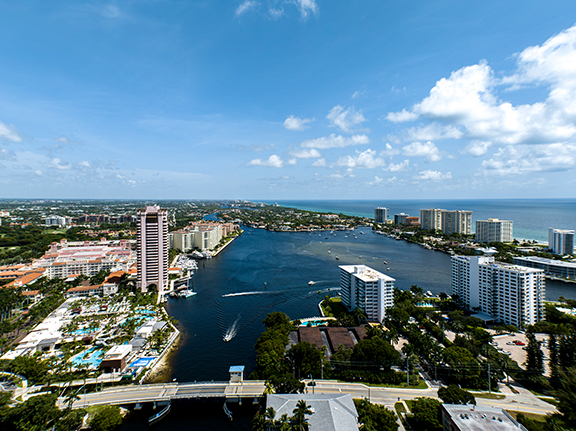
The city’s real estate offerings span an impressive range of typologies. On the oceanfront and along the Intracoastal Waterway, luxury condominiums and single-family estates command prices that reflect both the extraordinary quality of the properties themselves and the unparalleled value of their locations. Waterfront living in Delray Beach means waking to sunrise over the Atlantic, watching boats navigate the Intracoastal from a private terrace, and having the ocean accessible for morning swims before the rest of the world has finished its coffee. These are not abstract amenities — they are daily realities for Delray Beach’s waterfront residents, and they command the premiums they do for very good reason.
Moving inland, the downtown core and its surrounding neighborhoods offer a range of property types that appeal to buyers seeking walkability and urban energy rather than waterfront seclusion. Historic homes from the 1920s and 1930s, lovingly restored by owners who recognize their architectural value, sit alongside newer construction that has been designed with careful attention to the city’s aesthetic sensibility. Condominium buildings in and around downtown offer lock-and-leave convenience for buyers who travel frequently or divide their time between Delray Beach and other cities. The diversity of the housing stock in this part of the city means that different lifestyle preferences and budget parameters can each find suitable expression within a few blocks of each other.
Further west, established residential neighborhoods offer the spacious lots, quiet streets, and suburban tranquility that many buyers, particularly those with families, prioritize above all else. Country club communities with championship golf courses, resort-style amenities, and active social calendars have long been a defining feature of this part of Palm Beach County, and Delray Beach’s western areas contain some of the finest examples in South Florida. These communities offer a version of the Delray Beach lifestyle that is somewhat removed from the energy of Atlantic Avenue but fully connected to the city’s cultural and natural amenities by the excellent road network and relatively short driving distances that characterize the area.
The tax environment of Florida remains one of the state’s most powerful draws for buyers from high-tax states. The absence of a state income tax, combined with the homestead exemption available to primary residents, creates a financial context that significantly improves the effective return on real estate investment and the overall cost of living for those who make Florida their permanent home. For buyers relocating from states like New York, New Jersey, California, or Illinois, the financial calculus of a Delray Beach purchase often looks dramatically more favorable once the full tax picture is considered. Bernard Poirier works closely with buyers navigating this transition, ensuring they have access to the financial and legal guidance needed to structure their purchase and their residency change in the most advantageous way possible.
The international dimension of Delray Beach’s buyer pool is another factor that distinguishes this market. The city’s reputation has spread well beyond American borders, attracting buyers from Canada, Europe, Latin America, and beyond. Many of these international buyers are drawn by the combination of Florida’s favorable legal environment for foreign ownership, the city’s genuine cosmopolitan character, and the transparency and stability of the American real estate market relative to those of other countries. Navigating an international purchase in the United States involves specific complexities — from FIRPTA tax considerations to financing structures available to non-resident buyers — and working with an experienced professional like Bernard Poirier, who has extensive experience serving international clientele, is essential to ensuring a smooth and successful transaction.
Ultimately, investing in Delray Beach real estate is an investment in a vision of life at its most generous. It is a commitment to mornings on the beach, to evenings on Atlantic Avenue, to Saturday mornings at the Green Market and Sunday afternoons in the Japanese gardens. It is a bet on a community that has consistently demonstrated the capacity to reinvent itself while remaining true to the values that make it special. Bernard Poirier has dedicated his professional life to helping clients understand and access this remarkable place — not just as a market, but as a home. Whether you are a first-time buyer, a seasoned investor, or someone simply beginning to imagine what a different and better life might look like, the first conversation begins at bernardpoirier.com.
Bernard Poirier — Luxury Real Estate Group LLC — is your trusted guide to South Florida’s finest properties. With deep local expertise, international experience, and an unwavering commitment to his clients, Bernard helps buyers and sellers achieve their real estate goals with confidence.
Luxury Residences Available:
Luxury Residences available in Fort Lauderdale
Luxury Residences available in Miami Beach
Luxury Residences available in Miami
Luxury Residences available in Sunny Isles
Luxury Residences available in Aventura
Luxury Residences available in Boca Raton
Luxury Residences available in Hallandale Beach
Luxury Residences available in Hollywood Beach
Luxury Residences available in Pompano Beach
Luxury Residences available in Southwest Ranches
Luxury Residences available in South Florida, $10+
September 19th, 2026

September 9th, 2026
August 29th, 2026

August 23rd, 2026
August 1st, 2026