 Client Login
The Ultimate Prestige: Owning a Luxury Waterfront Residence...
October 10th, 2026


By Bernard Poirier | South Florida Luxury Waterfront Real Estate
An exclusive guide to architectural grandeur, private yacht dockage, investment potential, wealth preservation, and exceptional waterfront living.
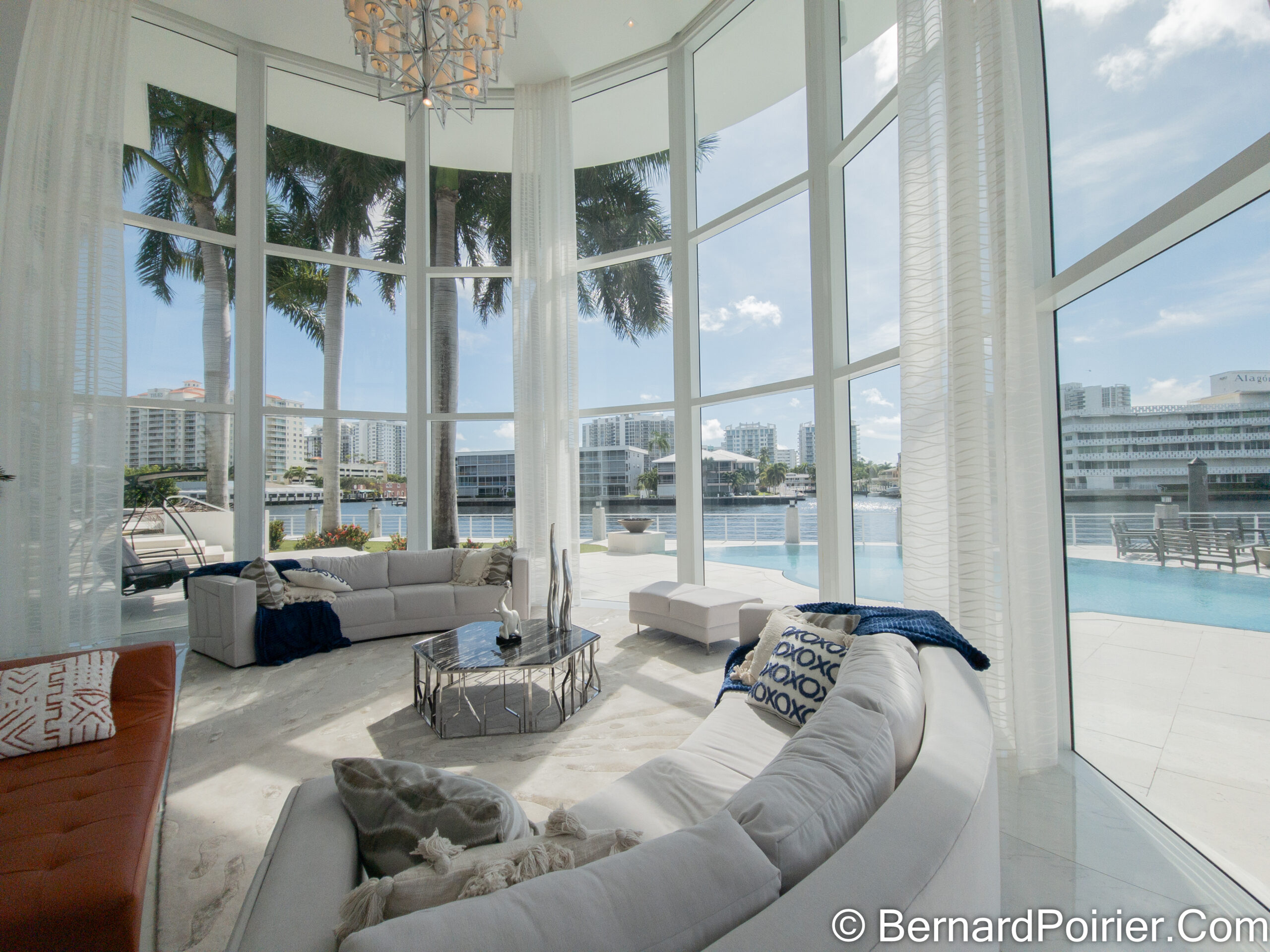
Imagine awakening to the golden light of the Florida sunrise illuminating the Intracoastal Waterway. Floor-to-ceiling windows reveal the tranquil movement of boats across the water, while expansive terraces invite you to enjoy the subtropical climate. Outside, an infinity-edge swimming pool reflects the surrounding architecture. At the private dock, a yacht awaits its next journey toward the Atlantic Ocean.
This is the essence of exceptional waterfront living in South Florida.
For affluent homeowners, international investors, entrepreneurs, and families seeking an extraordinary residential experience, South Florida offers a distinctive combination of coastal beauty, contemporary architecture, boating opportunities, and internationally recognized luxury destinations.
From the cosmopolitan sophistication of Miami to the yacht-oriented lifestyle of Fort Lauderdale and the timeless elegance of Palm Beach, the region presents a diverse selection of waterfront properties. These residences range from modern architectural masterpieces to established estates situated on prestigious waterways.
However, owning a luxury waterfront home involves much more than acquiring an impressive address. The most successful purchase combines lifestyle preferences with careful consideration of location, architectural quality, navigational access, property condition, insurance, and long-term ownership costs.
For yacht enthusiasts, the distinction between a property that simply overlooks the water and one that provides suitable private dockage can be decisive. For international buyers, ownership structures, tax residency, and estate planning may deserve equal attention. For families seeking a lasting legacy, the property’s functionality and maintenance requirements can influence its suitability for future generations.
Bernard Poirier, a luxury real estate professional based in South Florida, understands the importance of evaluating waterfront properties according to the individual needs of discerning buyers.
The objective is not merely to find a beautiful home. It is to identify a property whose location, design, amenities, and waterfront characteristics create an exceptional ownership experience.
Throughout this guide, we explore nine essential dimensions of luxury waterfront ownership, including architectural distinction, private yacht access, regional market differences, investment considerations, financial planning, security, generational wealth, and the acquisition process.
Discover South Florida luxury real estate through Bernard Poirier’s official website.
South Florida occupies a distinctive position in the international luxury real estate market. Its subtropical climate, extensive waterways, Atlantic coastline, and established luxury communities attract homeowners seeking a combination of residential sophistication and outdoor living.
Yet the appeal of waterfront real estate extends far beyond a panoramic view.
For discerning buyers, the quality of a waterfront property depends on the relationship between its location, architectural design, navigational access, privacy, and everyday functionality. A residence that successfully integrates these elements can offer an experience that differs substantially from conventional residential ownership.
In communities throughout Miami, Fort Lauderdale, and Palm Beach, luxury waterfront homes provide opportunities to enjoy the surrounding environment while maintaining the comfort and privacy of a personal estate.
Water introduces a distinctive dimension to residential architecture.
The changing light, movement of passing boats, reflections across the surface, and uninterrupted views can create an atmosphere that is difficult to reproduce in an inland setting.
A well-positioned residence may offer sunrise views, expansive Intracoastal panoramas, or a broad perspective of a navigable waterway. Carefully designed terraces, outdoor lounges, and large windows allow homeowners to experience these surroundings throughout the day.
For many buyers, this relationship with the water becomes the defining characteristic of the property.
However, not every waterfront location offers the same advantages. The width of the waterway, orientation of the lot, surrounding development, water depth, and boating restrictions can substantially influence the ownership experience.
A property situated on a broad Intracoastal frontage may provide a different atmosphere from a residence on a narrow residential canal. Similarly, a point lot may offer multiple water views, but its actual advantages depend on its configuration, neighboring properties, and applicable restrictions.
These distinctions deserve careful consideration before a purchase.
The term waterfront property encompasses a wide variety of residential settings.
Some homes face the Atlantic Ocean. Others overlook the Intracoastal Waterway, navigable canals, marinas, or protected waterways. Each setting presents different opportunities and responsibilities.
Oceanfront properties may provide dramatic coastal views but can face greater exposure to salt spray, wind, and coastal conditions.
Intracoastal residences may offer protected boating routes and views of passing vessels, although the suitability of the route depends on the property’s exact location and the owner’s vessel.
Canal-front homes can provide private dockage and convenient access to local waterways, but bridge clearances, channel dimensions, and turning space may limit certain boats.
The best property is therefore not necessarily the one with the most impressive photograph. It is the one whose characteristics match the buyer’s intended use.
A luxury waterfront residence can be designed around a complete lifestyle rather than simply providing accommodation.
Imagine beginning the morning with coffee on a covered terrace, followed by exercise in a private fitness suite. An afternoon might involve a swim in a heated pool, a short boating excursion, or a relaxed lunch beside the water.
As evening approaches, the residence becomes an elegant setting for entertaining. Large sliding glass doors connect the interior living room with an outdoor dining area, while landscape lighting highlights the gardens and architectural details.
This integration of spaces is particularly important in South Florida, where outdoor living is an essential component of many luxury homes.
Expansive terraces, summer kitchens, shaded seating areas, outdoor showers, and thoughtfully positioned swimming pools can extend the home’s functionality beyond its interior walls.
The most successful designs balance visual sophistication with practical comfort.
Luxury buyers often require more than an impressive entertainment area.
They may need dedicated guest accommodation, staff facilities, secure parking, generous storage, private workspaces, or separate areas for family members.
A large estate can accommodate these requirements, but its layout must be carefully considered.
For example, a residence with multiple floors may benefit from an elevator, clearly separated private and entertaining zones, and convenient access between the kitchen, garage, and principal living spaces.
A six-car garage may be particularly attractive to collectors, but the actual number of vehicles it accommodates depends on dimensions, circulation space, and any installed vehicle lifts.
Likewise, extensive glazing should be evaluated for energy performance, impact protection, and maintenance requirements.
True luxury is not simply the presence of amenities. It is the ease with which those amenities support daily life.
For some homeowners, a South Florida waterfront estate represents a long-term lifestyle decision. For others, it also forms part of a broader investment strategy.
These objectives can complement one another, but they should be evaluated separately.
A property’s desirability may be supported by its location, scarcity, architectural quality, and practical waterfront features. Nevertheless, future appreciation cannot be guaranteed, and ownership costs can be substantial.
Buyers should consider the purchase price alongside insurance, property taxes, maintenance, potential improvements, and the property’s likely resale market.
A residence should make sense financially as well as emotionally.
Bernard Poirier approaches South Florida luxury real estate with an appreciation for the details that distinguish one waterfront property from another.
For a buyer seeking an exceptional residence, the process begins by identifying the most important requirements: location, architectural style, privacy, yacht dockage, garage capacity, outdoor amenities, and long-term objectives.
These priorities create a framework for comparing properties objectively.
A knowledgeable real estate professional can also help coordinate the investigation of comparable sales, property documentation, and relevant due diligence with qualified specialists.
Explore South Florida waterfront opportunities through BernardPoirier.com.
Ultimately, exceptional waterfront living is about achieving harmony between architecture, nature, personal preferences, and the practical realities of ownership.
The most desirable residence is not necessarily the largest or most expensive. It is the one that delivers the right combination of location, comfort, privacy, and waterfront functionality.
Modern South Florida waterfront architecture represents a distinctive meeting point between design, engineering, technology, and the natural environment.
The most compelling residences are conceived not simply as large houses, but as carefully coordinated living environments in which light, space, materials, and views contribute to a unified experience.
From Miami’s contemporary architectural residences to Fort Lauderdale’s waterfront estates and Palm Beach’s refined homes, luxury design increasingly emphasizes the relationship between interior spaces and the surrounding landscape.
For sophisticated buyers, architecture is more than an aesthetic consideration. It influences comfort, privacy, maintenance, energy performance, and the long-term usability of the property.
Expansive glazing is one of the defining features of contemporary waterfront residences.
Floor-to-ceiling windows can frame the Intracoastal Waterway like a moving work of art, allowing natural light to enter the home while maintaining a visual connection with the surrounding landscape.
When a great room opens onto a broad terrace, the boundary between indoor and outdoor living becomes less pronounced.
This effect can be particularly impressive on a point lot, where the property’s configuration may provide broad water views in multiple directions.
However, extensive glazing requires careful engineering in South Florida’s climate.
Buyers should investigate impact protection, solar heat gain, shading, waterproofing, and compliance with applicable building requirements. The quality of the glazing system and its installation can influence both comfort and operating costs.
The most successful designs combine transparency with performance.
Some luxury waterfront estates extend across three levels, allowing the architect to establish distinct zones for entertaining, private living, and recreation.
The main floor may contain the principal living room, kitchen, dining area, and access to the pool terrace. Upper levels may accommodate bedrooms, offices, or private lounges. A rooftop terrace can provide an elevated setting for relaxation and entertaining.
Other layouts may place the primary suite on the main floor or dedicate an entire level to wellness and guest accommodation.
The appropriate configuration depends on the owner’s preferences, the lot, and the architectural design.
An elevator can improve convenience in a multilevel home, particularly when the property is used by several generations of a family.
Service circulation also matters. Laundry rooms, mechanical spaces, storage, and staff areas should be positioned so that daily operations do not interfere with the elegance of the principal living spaces.
A successful design makes a complex residence feel effortless.
For automotive enthusiasts, a six-car garage can become a defining feature of a luxury property.
Rather than functioning merely as a parking area, the garage may be designed as a private gallery for a collection of sports cars, luxury sedans, classic automobiles, or electric vehicles.
Carefully selected lighting, durable flooring, organized storage, and secure access can elevate the space considerably.
Buyers who intend to install vehicle lifts should verify ceiling height, structural capacity, electrical requirements, and permitted use.
A garage advertised as accommodating six vehicles may not provide sufficient room for six large vehicles when circulation space and lifts are taken into account.
Electric vehicle charging and ventilation requirements may also influence the design.
For collectors, these practical considerations are essential to preserving the intended experience.
Outdoor spaces are central to the appeal of South Florida luxury homes.
An infinity-edge swimming pool can create a visual connection between the residence and the water beyond. A spa, summer kitchen, outdoor dining area, and shaded lounge can transform the grounds into an extension of the home’s principal living spaces.
Rooftop terraces may provide elevated views and a more private environment for evening gatherings.
The design should account for sun exposure, wind, drainage, privacy, and the long-term maintenance of outdoor materials.
Salt air and humidity can affect finishes, fasteners, mechanical equipment, and exterior surfaces. Buyers should therefore consider durability alongside appearance.
Landscaping can contribute to privacy, but plant selection and placement must account for drainage, root systems, maintenance, and local conditions.
Exceptional outdoor architecture is both beautiful and resilient.
Luxury interiors often feature natural stone, carefully selected wood, bespoke cabinetry, sculptural lighting, and high-quality metal finishes.
Italian marble, custom millwork, and architectural lighting can create a distinctive visual identity, but their value depends on the quality of execution.
Buyers should inspect installation details, maintenance requirements, and the condition of surfaces.
A dramatic material may photograph beautifully while requiring more maintenance than an alternative better suited to the owner’s lifestyle.
The same principle applies to lighting.
Layered lighting can combine architectural illumination, task lighting, accent features, and carefully controlled ambient light. In a waterfront residence, this approach can enhance the interior without overwhelming the exterior views.
Modern luxury homes may integrate climate control, lighting, security, entertainment, window treatments, and access management through centralized automation.
Additional amenities can include temperature-controlled wine cellars, private cinemas, wellness suites, saunas, steam rooms, and dedicated fitness studios.
Buyers should evaluate how well these systems work together.
The presence of sophisticated equipment does not guarantee reliable integration. Service contracts, warranties, network requirements, system compatibility, and the availability of qualified technicians should all be considered.
Before closing, buyers should also establish clear control of connected devices, user accounts, and access credentials.
Technology should simplify the ownership experience rather than create unnecessary complexity.
Bernard Poirier recognizes that architectural distinction must be considered alongside construction quality, location, and practical functionality.
A modern residence may be visually striking, but buyers should also evaluate its maintenance history, building systems, permitting, energy performance, and relationship to the waterfront.
The strongest properties integrate architecture with their surroundings instead of treating the water as a decorative backdrop.
Explore South Florida luxury residences through Bernard Poirier’s website.
Ultimately, architectural excellence transforms a collection of rooms and amenities into a coherent living environment—one that supports privacy, entertaining, relaxation, and the pleasures of waterfront life.
For serious boating enthusiasts, one of the greatest attractions of South Florida real estate is the opportunity to keep a vessel at home.
Instead of arranging transportation to a marina, homeowners with suitable private dockage can prepare for a boating excursion within the privacy of their own property.
Yet not every waterfront residence can accommodate every vessel.
A property’s suitability depends on its dock dimensions, water depth, navigational route, bridge clearances, turning space, structural condition, and applicable permits.
For an owner of a large yacht, these considerations may be more important than the residence’s interior finishes.
The phrase direct ocean access generally describes a navigable route between a property’s dock and the open ocean.
However, the term should always be evaluated in relation to the intended vessel.
A route may be navigable for a small boat but unsuitable for a taller yacht because of a fixed bridge. Another route may offer sufficient overhead clearance but have insufficient water depth for a vessel with a deeper draft.
Buyers should investigate the complete route rather than relying solely on a property’s marketing description.
Relevant considerations include:
A marine specialist can help determine whether the property meets the owner’s actual boating requirements.
A residence advertised as accommodating a yacht of approximately 120 feet may be attractive to an owner of a large vessel.
Nevertheless, dock length alone does not establish suitability.
The vessel’s overall length, beam, draft, mooring arrangement, and operational requirements must be considered together.
The dock must also have appropriate structural capacity and sufficient usable space.
Buyers should investigate the condition of the seawall, pilings, decking, electrical connections, water supply, and any permitted marine structures.
If a dock has been modified, documentation should be reviewed to establish whether the changes received the necessary approvals.
The same applies to proposed extensions or improvements.
Large yachts may require specialized shore-power connections.
A property’s advertised electrical service should not be assumed compatible with a particular vessel.
Voltage, phase, amperage, connector type, grounding, and available electrical capacity must be confirmed by qualified professionals.
For example, a reference to 300-amp service does not, by itself, establish compatibility with a yacht’s electrical system.
Owners should also consider water connections, lighting, dock access, and any additional services needed for the intended vessel.
A marine contractor and appropriately qualified electrician can help determine whether the dock’s utilities are suitable.
The Intracoastal Waterway is an important part of South Florida’s residential appeal.
For homeowners, it can provide a combination of navigable boating routes, expansive views, and convenient access to recreational activities.
Properties situated along wider waterways may offer more open views and different maneuvering opportunities than homes on narrower canals.
However, the quality of a property’s dockage depends on its exact position, depth, configuration, and the conditions of the navigable route.
A point lot may provide substantial water frontage, but buyers should not assume that every point lot offers unrestricted navigation or superior dockage.
Independent verification remains essential.
Fort Lauderdale has an established relationship with recreational boating and the marine industry.
The city and surrounding communities offer access to marinas, marine services, waterfront restaurants, and routes toward the Atlantic Ocean.
For yacht owners, this infrastructure can make the region particularly appealing.
A private dock can simplify the transition between home and vessel, while nearby marine services can support maintenance and operational requirements.
However, the convenience of private dockage should be evaluated alongside the property’s total cost of ownership.
Dock repairs, seawall maintenance, inspections, insurance, and marine utility expenses may contribute to ongoing costs.
South Florida provides access to boating routes toward the Bahamas and other Atlantic destinations.
For many owners, the prospect of leaving home aboard a private yacht and spending time among island communities is a defining attraction of the lifestyle.
However, international boating requires appropriate vessel documentation, customs and immigration compliance, weather planning, and consideration of the yacht’s range and capabilities.
Travel conditions vary according to the vessel, departure point, sea state, and time of year.
The ability to reach a destination should never be assumed solely because a property has ocean access.
Suitable private dockage may distinguish a luxury waterfront home from competing properties.
However, the contribution of a dock to market value depends on the buyer pool and the property’s actual marine characteristics.
A dock with verified access, appropriate dimensions, and reliable utilities may be particularly valuable to an owner whose yacht matches those specifications.
For another buyer, the same features may be less important.
The property’s price should therefore be evaluated through relevant comparable sales and an understanding of the target market.
Bernard Poirier understands that a yacht owner’s property search should begin with the vessel rather than the listing photographs.
Buyers should establish the yacht’s dimensions, draft, height, electrical requirements, and expected navigation patterns before narrowing the search.
That information can help identify residences worthy of detailed investigation.
Marine inspections, dock permitting, navigational verification, and structural evaluations should be coordinated with qualified specialists.
Discover South Florida waterfront opportunities at BernardPoirier.com.
For the serious yacht owner, the ultimate privilege is not simply living beside the water. It is owning a property whose verified characteristics support the boating lifestyle the owner intends to enjoy.
South Florida’s luxury property market encompasses a variety of communities, each offering its own residential atmosphere, architectural styles, amenities, and waterfront opportunities.
Although Miami, Fort Lauderdale, and Palm Beach are frequently discussed together, they do not provide identical experiences.
The best destination depends on the buyer’s priorities, including boating requirements, privacy, preferred architecture, proximity to business centers, cultural interests, and long-term ownership objectives.
Understanding these differences is an important step toward identifying the right property.
Miami attracts buyers seeking a dynamic metropolitan environment with international connections, contemporary architecture, sophisticated dining, and access to major business districts.
Brickell offers an urban residential experience, with high-rise properties, restaurants, offices, and proximity to the city’s financial center.
Miami Beach provides a different atmosphere, combining coastal living, architectural heritage, luxury hospitality, and oceanfront recreation.
Bal Harbour is associated with upscale shopping and refined residential surroundings, while South of Fifth offers a desirable setting near the southern end of Miami Beach.
For waterfront estate buyers, the relevant considerations extend beyond the neighborhood’s reputation.
Buyers should evaluate dockage, navigational access, privacy, lot dimensions, insurance, flood exposure, and the property’s relationship to surrounding development.
Miami may be particularly attractive to individuals who value international connectivity and metropolitan convenience.
Fort Lauderdale has a strong association with waterfront residential living and recreational boating.
Its network of waterways creates opportunities for homes with private docks, canal views, and access to the Intracoastal Waterway.
The region offers a range of architectural styles, including established residences, renovated estates, and contemporary new construction.
For yacht owners, the availability of marine services and nearby boating infrastructure can be an important advantage.
However, properties within the same city can differ considerably in navigational access.
A residence on a narrow canal may offer a different boating experience from a home positioned on a broader waterway with a more direct route toward the ocean.
Buyers should evaluate the specific location rather than relying on general descriptions of Fort Lauderdale as a boating destination.
The surrounding neighborhood also matters. Access to beaches, restaurants, shopping, private aviation, and other amenities can influence the property’s suitability for the owner’s lifestyle.
Palm Beach is associated with established prestige, landscaped estates, architectural character, and a refined residential atmosphere.
The area attracts buyers who appreciate privacy, upscale shopping, golf, beaches, and established luxury communities.
Its residential properties include historic homes, oceanfront estates, and contemporary residences.
Each category has different ownership considerations.
Historic properties may offer distinctive architectural features and mature landscaping, but preservation requirements and maintenance costs should be investigated.
Newer homes may provide modern layouts, updated mechanical systems, and contemporary amenities, although construction quality and long-term maintenance still require careful assessment.
Waterfront properties also differ in exposure and utility. Oceanfront residences, Intracoastal homes, and properties on protected waterways should not be treated as interchangeable.
The right choice depends on the buyer’s intended use.
The broader region includes communities such as Boca Raton, Aventura, Sunny Isles Beach, Pompano Beach, and Hallandale Beach.
These areas provide additional possibilities for buyers seeking particular waterfront characteristics, architectural styles, or residential environments.
Boca Raton may appeal to buyers seeking an established residential community with upscale amenities.
Aventura offers a combination of residential convenience, shopping, and access to the wider Miami metropolitan area.
Sunny Isles Beach is known for its coastal high-rise residential environment, while Pompano Beach provides a range of waterfront properties and boating opportunities.
Hallandale Beach offers access to both coastal amenities and the broader South Florida metropolitan region.
These general characteristics are only starting points. Individual neighborhoods and properties must be evaluated on their own merits.
Selecting a destination requires a broader assessment than comparing property prices.
Buyers should consider commuting requirements, access to airports, healthcare, schools, dining, shopping, and recreational amenities.
For yacht owners, the complete navigational route and availability of marine services may be particularly important.
For families, neighborhood character, outdoor space, and the property’s suitability for long-term use may take priority.
Insurance, taxes, maintenance, and future resale prospects should also be considered.
A property that appears less expensive initially may require substantial improvements or have higher ongoing costs.
Bernard Poirier helps buyers approach South Florida luxury real estate by identifying the characteristics that matter most to them.
The search can then focus on appropriate neighborhoods and properties rather than being limited to a single well-known address.
Whether the priority is Miami’s metropolitan sophistication, Fort Lauderdale’s boating environment, or Palm Beach’s refined residential character, the property should be evaluated according to the buyer’s lifestyle and financial objectives.
Explore the region through Bernard Poirier’s website.
The best waterfront destination is the one that combines location, property quality, and everyday convenience in a way that remains compelling long after the purchase.
A luxury waterfront residence may serve as a primary home, seasonal retreat, family gathering place, or long-term investment.
For some owners, lifestyle is the principal objective. Others also consider the property’s potential role in preserving wealth or diversifying a broader portfolio.
These goals can coexist, but the financial merits of the purchase should be examined independently from its emotional appeal.
An extraordinary property is not automatically a superior investment. Purchase price, market demand, ongoing expenses, liquidity, and future resale conditions all influence the outcome.
Waterfront land in established South Florida neighborhoods is geographically limited.
The availability of suitable parcels depends on shoreline configuration, zoning, development patterns, environmental considerations, and local regulations.
Properties with desirable water views, practical dockage, convenient navigation, and well-designed residences may attract a specialized group of buyers.
This limited supply can contribute to long-term desirability.
However, scarcity does not guarantee appreciation.
A property’s future value also depends on construction quality, location-specific demand, insurance availability, maintenance requirements, and broader economic conditions.
Buyers should evaluate the individual property rather than assume that every waterfront residence will perform similarly.
A reliable valuation begins with relevant comparable transactions.
For waterfront properties, comparisons based solely on interior square footage can be misleading.
Two homes with similar living areas may differ significantly in lot dimensions, dockage, water depth, architectural quality, privacy, and navigational access.
One may have a permitted dock suitable for a particular vessel, while another may have limited water frontage or bridge restrictions.
Other factors include the age of the residence, renovation quality, seawall condition, pool configuration, garage capacity, and surrounding development.
A thorough analysis considers these differences rather than assigning arbitrary premiums.
Recent closed sales can provide evidence of what buyers have actually paid. Current listings indicate competition and seller expectations, while price reductions and marketing periods may provide additional context.
No single comparable sale should determine the value of a unique estate without considering its specific characteristics.
New construction often appeals to buyers seeking contemporary layouts, modern building systems, and reduced immediate renovation requirements.
Established residences may offer mature landscaping, larger lots, distinctive locations, or waterfront features that are difficult to replicate.
Neither category is inherently superior.
A newly constructed property should be evaluated for workmanship, permitting, warranties, material quality, and the reliability of its building systems.
An older residence may require improvements to roofing, plumbing, electrical systems, windows, mechanical equipment, or exterior structures.
Waterfront-specific expenses can include dock repairs, seawall work, drainage improvements, and pool renovations.
Buyers should estimate these costs before deciding whether a property represents good value.
The purchase price is only one component of the financial commitment.
Luxury waterfront homeowners should budget for property taxes, insurance, utilities, landscaping, pool service, security, dock maintenance, and periodic replacement of major systems.
Large residences with elevators, extensive glazing, sophisticated automation, multiple pools, or elaborate outdoor spaces may require specialized service providers.
Coastal exposure can also increase maintenance requirements for certain finishes and mechanical components.
Insurance deserves particular attention.
Coverage and pricing may depend on the building’s age, roof condition, flood exposure, construction type, mitigation features, and underwriting requirements.
Buyers should obtain property-specific quotations rather than rely on generalized estimates.
Luxury real estate is not a liquid asset in the same sense as cash or publicly traded securities.
The potential buyer pool for a high-value waterfront estate may be relatively small, and the time required to complete a sale can vary significantly.
Market conditions may also differ between neighborhoods and price segments.
A property that attracts strong interest during a period of abundant liquidity may require more time to sell when financing conditions tighten or buyers become cautious.
Owners should therefore avoid assuming that a property can be sold quickly at a predetermined price.
A realistic holding period and adequate financial reserves can help reduce pressure to sell during unfavorable conditions.
Real estate can contribute to a diversified investment strategy, but a single luxury property may also represent a substantial concentration of wealth.
The residence may be exposed to local market conditions, insurance costs, weather-related risks, and unexpected capital expenditures.
Buyers should consider how the acquisition fits within their overall financial position.
Maintaining adequate liquidity for other obligations can be especially important when a property requires extensive maintenance or major improvements.
The correct approach depends on the owner’s circumstances, investment horizon, and risk tolerance.
Bernard Poirier encourages buyers to evaluate luxury waterfront real estate through both lifestyle and financial perspectives.
Before making an offer, buyers should examine comparable sales, anticipated ownership costs, the condition of the property, and the practical value of its waterfront characteristics.
They should also consider how the property might appeal to future purchasers.
A residence that combines a desirable location, functional design, and verified dockage may serve a broader range of buyers than one whose principal features are highly specialized.
Explore South Florida opportunities through BernardPoirier.com.
Luxury waterfront ownership can be rewarding, but the most disciplined purchases are based on evidence, realistic assumptions, and a clear understanding of risk.
South Florida attracts entrepreneurs, executives, investors, and internationally mobile households for a variety of reasons, including climate, business opportunities, residential amenities, and Florida’s tax environment.
For some buyers, the absence of a state personal income tax is an important consideration when evaluating a move to Florida.
However, purchasing a property does not automatically eliminate tax obligations in another state or country.
The financial consequences depend on domicile, residency status, income sources, ownership arrangements, and applicable federal, state, and international laws.
For high-net-worth buyers, the real estate decision should be coordinated with qualified tax and legal advice.
Florida does not impose a state personal income tax.
The state also does not impose a separate state estate tax.
These features may be relevant to individuals considering Florida as their primary residence, but they should not be interpreted as a universal exemption from taxation.
Federal income taxes, federal estate tax rules, property taxes, and other applicable obligations may remain relevant.
Florida’s lack of a separate state personal capital gains tax also does not eliminate federal capital gains tax obligations.
The tax treatment of an investment depends on the asset, ownership structure, transaction, and taxpayer’s circumstances.
Buyers should therefore evaluate the complete financial picture rather than focusing on a single tax feature.
Individuals moving from another state should understand that residency and domicile questions may involve more than purchasing a home.
Relevant considerations can include where the individual maintains a principal residence, the amount of time spent in different jurisdictions, family and business connections, official records, and other evidence of the person’s actual circumstances.
Some states apply specific statutory tests or reporting requirements.
A person who maintains connections to multiple states may need professional guidance to understand how those rules apply.
International buyers face additional questions involving immigration status, tax residency in their home country, and the potential application of U.S. tax rules.
A property purchase should be one component of a broader, properly documented residency plan.
Luxury real estate can be held directly by an individual or through a legally appropriate entity, trust, or other ownership arrangement.
The correct structure depends on the buyer’s objectives and circumstances.
Relevant issues may include liability management, succession planning, financing, tax treatment, privacy, reporting obligations, and administrative expenses.
An entity is not automatically preferable to direct ownership.
Some structures can introduce additional filings, legal costs, financing complications, or tax consequences.
Buyers should consult qualified legal and tax professionals before selecting an ownership arrangement.
The decision should be made early enough to avoid unnecessary complications during the transaction.
International purchasers should consider how U.S. property ownership interacts with their wider financial affairs.
Depending on their circumstances, relevant questions may include federal income tax, estate tax exposure, ownership reporting, financing, currency transfers, rental income, and the tax consequences of a future sale.
Foreign sellers may also encounter the Foreign Investment in Real Property Tax Act, commonly known as FIRPTA.
FIRPTA can impose withholding requirements on certain dispositions of U.S. real property interests by foreign persons. Its application depends on the transaction and the parties involved.
International ownership can involve additional reporting and compliance requirements, so professional advice is particularly important.
A luxury waterfront residence may contribute to a broader wealth preservation strategy because it is a tangible asset that also provides personal utility.
A property can serve as a primary home, seasonal retreat, or family gathering place while forming part of a long-term estate plan.
Nevertheless, real estate is relatively illiquid and can involve substantial carrying costs.
It may be exposed to market fluctuations, natural hazards, insurance changes, legal disputes, and unexpected repairs.
A residence should therefore be evaluated within the context of the owner’s complete financial position.
The most appropriate acquisition is one that meets the buyer’s needs without creating unnecessary financial pressure.
Buyers should also consider the possible consequences of selling, transferring, or renting the property in the future.
A residence used as a primary home may receive different tax treatment from an investment property, subject to applicable requirements.
Rental activity can create additional income reporting and compliance obligations.
Transfers to family members may raise estate planning, gift tax, or other legal questions.
These issues are best addressed before the transaction rather than after a change in circumstances.
Bernard Poirier recognizes that international and high-net-worth buyers often require a coordinated acquisition process.
The real estate component involves property selection, valuation, negotiation, inspections, and closing arrangements. Tax residency, estate planning, immigration, and ownership-structure questions should be addressed by appropriately qualified professionals.
The goal is to ensure that the residence fits the buyer’s broader financial and personal objectives.
Explore South Florida properties through BernardPoirier.com.
When lifestyle and financial planning are considered together, a luxury waterfront residence can become part of a thoughtful long-term strategy.
For affluent individuals and families, privacy can be as important as architecture or location.
Entrepreneurs, executives, public figures, and international buyers may prefer a residence that separates their professional responsibilities from their personal lives.
South Florida offers a range of waterfront settings, including quiet residential streets, gated communities, and individual estates designed to provide varying degrees of privacy.
However, privacy is not a single feature. It results from the interaction of location, architecture, landscaping, technology, and everyday operating practices.
The location of a property can influence the degree of privacy it offers.
A home on a quiet residential street may experience less traffic than one near a major commercial corridor.
A carefully positioned residence may benefit from generous setbacks, mature landscaping, screened outdoor areas, and architectural elements that reduce direct views from neighboring properties.
Waterfront homes require additional consideration.
A residence overlooking a navigable waterway may experience passing boat traffic, while a property on a less active canal may provide a different atmosphere.
Buyers should visit the property at different times of day and, when possible, observe conditions during both weekdays and weekends.
The objective is to understand the property’s real-world environment rather than relying exclusively on marketing photographs.
Thoughtful architecture can preserve panoramic views while limiting unwanted exposure.
Screened terraces, landscaped courtyards, strategically placed windows, and carefully positioned outdoor lounges can create a balance between openness and discretion.
Bedrooms and private outdoor areas may require different design considerations from entertainment spaces.
For larger estates, separate guest accommodation, service entrances, and discreet circulation routes can improve functionality.
Landscaping may also contribute to privacy, but plant selection must account for maintenance, drainage, root systems, and local conditions.
The most effective design integrates privacy into the property rather than treating it as an afterthought.
Modern luxury residences may incorporate monitored alarms, cameras, controlled access, motion sensors, perimeter detection, and remote notifications.
Some properties also use biometric entry systems or other advanced access technologies.
Nevertheless, sophisticated equipment does not automatically guarantee security.
Buyers should investigate installation quality, backup power, communications redundancy, system maintenance, and the availability of professional monitoring.
They should also understand how the system operates during a power outage or internet disruption.
A well-designed security plan combines appropriate technology with sound operating procedures.
Connected homes introduce additional considerations.
Cameras, access systems, climate controls, voice assistants, and remote monitoring applications may collect or transmit information.
Owners should understand who has administrative access, how credentials are managed, where data is stored, and how devices receive security updates.
When purchasing an existing property, buyers should arrange for the appropriate transfer or reset of accounts, passwords, network credentials, and connected devices.
Former occupants, contractors, or service providers should not retain unnecessary access.
Cybersecurity should be treated as part of modern residential management.
Some luxury buyers prefer to limit unnecessary publicity during property searches and negotiations.
They may wish to coordinate visits through appropriate channels, restrict access to sensitive documents, and minimize the distribution of personal information.
Transactions must still comply with applicable legal, identification, financing, and disclosure requirements.
Discretion should never be confused with avoiding legitimate obligations.
Instead, it involves professional handling of sensitive information and a clear understanding of who needs access to it.
Security considerations continue after closing.
Seasonal residents may need reliable property management, periodic inspections, emergency response arrangements, and oversight of maintenance contractors.
Owners should also establish clear procedures for granting access to employees, vendors, guests, and service providers.
A well-organized management system can reduce uncertainty while protecting the owner’s privacy.
Bernard Poirier understands that privacy expectations can influence the selection of a luxury waterfront residence.
Buyers should identify their priorities early, including preferred separation from neighboring properties, security requirements, guest access, and expectations regarding public exposure.
Those requirements can help guide the search toward appropriate locations and architectural configurations.
Discover South Florida luxury properties through Bernard Poirier’s official website.
True privacy is not created by a single security device or a prestigious address. It emerges from a combination of location, design, technology, and thoughtful management.
A luxury waterfront estate can become one of the most meaningful assets a family owns.
Unlike an investment that exists primarily as a financial entry on a statement, a residence can become a gathering place for celebrations, holidays, family traditions, and shared experiences.
For some families, a South Florida home becomes the setting for boating trips, outdoor dining, and time spent together across generations.
Yet transferring a property successfully requires more than deciding who should inherit it.
Long-term ownership involves maintenance, insurance, taxes, legal planning, liquidity, and the possibility that future generations may have different priorities.
A buyer considering generational ownership should evaluate whether the property can support the family’s needs over time.
A well-designed residence may include multiple bedrooms, flexible guest accommodation, accessible circulation, outdoor recreation areas, and sufficient space for gatherings.
A private dock may support a family boating tradition, while an expansive terrace can provide a setting for celebrations and entertaining.
However, future suitability depends on more than the property’s size.
Maintenance requirements, accessibility, operating costs, and the location’s long-term appeal should also be considered.
A highly elaborate estate can become a burden if the family does not have the resources or desire to maintain it.
The strongest legacy properties combine emotional significance with practical sustainability.
Estate planning can help determine how a property will be managed or transferred if the owner dies or becomes unable to manage financial affairs.
Depending on the circumstances, appropriate arrangements may involve a will, trust, business entity, or other legally recognized structure.
The correct approach depends on the owner’s family situation, domicile, citizenship, asset composition, and tax exposure.
International families may face additional considerations involving the interaction of U.S. law and foreign succession rules.
A qualified estate planning attorney should review the intended arrangements before they are implemented.
Planning in advance can help reduce uncertainty and clarify responsibilities.
When several heirs inherit a residence, their interests may not align.
One family member may wish to occupy the home, another may prefer to rent it, and another may favor selling it.
Disagreements can arise over renovation budgets, maintenance expenses, scheduling, and the allocation of responsibilities.
Advance planning can reduce uncertainty by establishing decision-making procedures and defining how expenses will be shared.
Families should also consider what happens if an owner wishes to sell an interest or can no longer contribute financially.
A clear ownership framework can help protect both the property and family relationships.
Waterfront residences require long-term care.
Roofs, seawalls, docks, swimming pools, exterior finishes, mechanical systems, elevators, and security equipment all require periodic attention.
A multigenerational plan should include a realistic maintenance reserve and a record of major repairs, warranties, permits, and service providers.
Owners should consider whether future family members will have the time and resources to manage a large estate.
The costs of insurance, taxes, and routine maintenance should be evaluated alongside the property’s value.
A sustainable property is more likely to remain a source of enjoyment rather than becoming an obligation.
Real estate can represent a substantial portion of a family’s wealth, but it is not always easy to divide among heirs.
If one property represents a large share of the estate, other family members may require liquid assets or another arrangement to achieve an equitable distribution.
The family’s overall financial position should therefore be considered alongside the residence.
Potential selling costs, taxes, maintenance expenses, and future market conditions should also be evaluated.
A legacy plan should remain practical as family circumstances change.
The objective is not necessarily to retain a property forever. It is to preserve the family’s ability to make thoughtful decisions about the asset.
Financial considerations are important, but they do not fully explain the significance of a family home.
A waterfront residence can become a setting for traditions that continue long after the original owner has passed away.
Children may learn to navigate from the property’s dock. Families may gather around the outdoor dining table. Holidays may become associated with the same waterfront views and familiar spaces.
These experiences can give a property significance beyond its market value.
Nevertheless, the emotional importance of a residence should be balanced against the financial and practical realities of maintaining it.
Bernard Poirier recognizes that many luxury buyers evaluate waterfront residences with an eye toward the future.
The right acquisition may provide immediate enjoyment while remaining suitable for family use over many years.
Buyers should consider architectural functionality, location durability, maintenance requirements, and the property’s potential appeal to future purchasers.
Legal and financial advisers can then help coordinate ownership and succession planning.
Explore luxury waterfront opportunities at BernardPoirier.com.
A meaningful legacy is not defined solely by the value of an estate. It is defined by the thoughtfulness with which the property is acquired, maintained, and passed forward.
Purchasing a luxury waterfront residence is a significant undertaking.
The property may involve complex architectural features, private dockage, seawalls, mechanical systems, insurance requirements, permits, and substantial financial commitments.
For buyers seeking an exceptional residence, a structured acquisition process helps protect the purchase decision and the ownership experience that follows.
The process should combine a clear understanding of the buyer’s priorities with careful property evaluation, financial planning, negotiation, and professional due diligence.
Before beginning the search, buyers should establish their essential requirements.
These may include the preferred city or neighborhood, architectural style, lot dimensions, number of bedrooms, garage capacity, privacy, and budget.
For yacht owners, the list should also specify vessel length, beam, draft, height, electrical requirements, and intended navigation routes.
It is useful to distinguish nonnegotiable requirements from desirable extras.
A buyer who requires verified access for a large yacht should eliminate unsuitable properties early rather than compromise on a fundamental need.
A clear property brief helps focus the search on residences that genuinely meet the buyer’s objectives.
The financial assessment should extend beyond the purchase price.
Buyers should consider closing costs, property taxes, insurance, inspections, immediate improvements, furnishings, and ongoing maintenance.
For international purchasers, currency exchange, cross-border transfers, and financing arrangements may also be relevant.
Even buyers purchasing without a mortgage should evaluate liquidity and the potential need for major repairs.
The objective is to understand the complete financial commitment before entering serious negotiations.
The property’s physical characteristics should be investigated independently.
A general home inspection may need to be supplemented by specialist assessments of the roof, structure, electrical and mechanical systems, swimming pool, seawall, and dock.
Buyers should verify permits, approved dock dimensions, water depth, relevant restrictions, and the navigability of the route to the ocean.
Flood exposure, drainage, wind mitigation, insurance availability, and applicable building requirements also deserve careful attention.
Marketing descriptions should be treated as starting points for verification rather than substitutes for independent evidence.
A luxury property should be evaluated against relevant market evidence.
Comparable sales, competing listings, recent price adjustments, property condition, and unique waterfront characteristics can influence negotiating strategy.
Buyers should distinguish between features that have broad market appeal and those valuable primarily to a particular owner.
For example, specialized yacht dockage may be essential to one purchaser but less important to another.
A sound negotiating strategy considers the property’s advantages alongside its limitations and the seller’s circumstances.
A luxury acquisition may require input from real estate professionals, attorneys, inspectors, surveyors, marine specialists, insurance brokers, lenders, and tax advisers.
Each professional evaluates a different aspect of the transaction.
The buyer should ensure that significant findings are documented and that unresolved issues are addressed within the applicable contractual deadlines.
The exact due diligence process depends on the contract, the property, and the negotiated terms.
Professional coordination helps reduce the risk of overlooking important matters.
Before closing, buyers should understand the practical responsibilities associated with the residence.
These may include maintenance contracts, pool service, dock inspections, landscaping, security monitoring, home automation support, and periodic replacement of major equipment.
For a seasonal residence, property management and emergency response arrangements may be particularly important.
Buyers should also consider whether specialized systems can be serviced locally and whether relevant warranties and documentation will transfer.
A well-organized ownership plan can help preserve the home’s condition and reduce avoidable disruptions.
Closing is an important milestone, but it is not the end of the acquisition process.
Buyers should confirm the transfer of relevant documentation, warranties, access credentials, service records, and applicable permits.
Insurance should be arranged appropriately, utilities and service accounts transferred, and security systems configured for the new owner.
For residences with private dockage, buyers should retain relevant marine documentation and inspection records.
A coordinated transition helps ensure that the residence is ready for its intended use.
Ownership objectives may evolve over time.
A residence initially purchased as a seasonal retreat may later become a primary home. A family’s boating needs may change, or maintenance requirements may become more demanding.
Periodic reviews can help owners determine whether the property continues to meet their needs.
These reviews may include insurance, maintenance planning, market valuation, estate planning, and the property’s suitability for future use.
A thoughtful ownership strategy recognizes that a luxury residence is a long-term responsibility as well as a source of enjoyment.
Bernard Poirier represents the South Florida luxury real estate perspective that sophisticated buyers need when evaluating exceptional residential opportunities.
The objective is to connect the buyer’s vision with a property whose location, architecture, waterfront characteristics, and financial profile are appropriate for its intended purpose.
That process begins with listening carefully, identifying priorities, examining market evidence, and coordinating the necessary steps toward an informed acquisition.
Whether the search focuses on Miami, Fort Lauderdale, Palm Beach, or another South Florida waterfront community, every property should be evaluated on its individual merits.
Begin exploring your options at BernardPoirier.com.
For buyers who value architectural distinction, private yacht dockage, privacy, and long-term ownership, professional guidance can help bring clarity to a complex transaction.
Owning a luxury waterfront residence in South Florida is an opportunity to bring together lifestyle, architecture, and long-term planning in one exceptional setting.
It can mean waking to views of the Intracoastal Waterway, enjoying a private swimming pool, entertaining guests on expansive terraces, or departing from a personal dock for a day on the Atlantic.
It can also mean making a substantial financial commitment that deserves careful analysis, professional advice, and disciplined due diligence.
The most compelling properties combine desirable locations with high-quality construction, practical waterfront access, thoughtful design, and an ownership structure suited to the buyer’s circumstances.
Miami offers international energy and metropolitan sophistication. Fort Lauderdale provides a distinctive boating-oriented lifestyle. Palm Beach is associated with established elegance and refined residential surroundings. Across the wider region, individual waterfront communities present opportunities for buyers with different priorities.
Yet the ultimate measure of luxury is personal.
For one owner, it is the convenience of keeping a yacht at home. For another, it is the privacy of a secluded estate. For a family, it may be the opportunity to create a residence that remains meaningful for generations.
Bernard Poirier believes that an exceptional real estate acquisition begins with understanding what matters most to the buyer and identifying a property that supports those objectives.
The ultimate prestige is not simply owning an expensive home. It is owning the right home, in the right location, for the right reasons.
Discover the possibilities of South Florida luxury waterfront real estate at BernardPoirier.com.
Disclaimer: This article is intended for general informational and marketing purposes. Property values, future appreciation, tax treatment, insurance availability, and suitability for particular vessels depend on individual circumstances and cannot be guaranteed. Buyers should consult qualified real estate, legal, tax, insurance, engineering, and marine professionals as appropriate.

1. Where are the best places to buy luxury waterfront homes in South Florida?
Miami, Fort Lauderdale, and Palm Beach are prominent destinations for luxury waterfront real estate. The best location depends on the buyer’s priorities, including boating access, architecture, privacy, amenities, and budget.
2. What should buyers look for in a luxury waterfront property?
Buyers should evaluate location, construction quality, water depth, dockage, navigational access, seawall condition, flood exposure, insurance, maintenance costs, and comparable sales.
3. Can luxury waterfront homes in Fort Lauderdale accommodate large yachts?
Some properties can accommodate large yachts, but suitability depends on dock dimensions, water depth, structural condition, electrical service, permits, and navigational access. Buyers should obtain independent verification.
4. Is South Florida luxury real estate a good long-term investment?
Luxury waterfront real estate may offer long-term value, but appreciation is not guaranteed. Results depend on purchase price, market conditions, carrying costs, property condition, and future demand.
5. What are the tax advantages of owning property in Florida?
Florida does not impose a state personal income tax or a separate state estate tax. However, federal taxes, property taxes, and other obligations may apply. Buyers should consult qualified tax professionals regarding their individual circumstances.
6. Who can help buyers explore luxury waterfront properties in South Florida?
Bernard Poirier is a South Florida luxury real estate professional. Buyers can explore property information and regional real estate resources at BernardPoirier.com.
Luxury Residences Available:
Luxury Residences available in Fort Lauderdale
Luxury Residences available in Miami Beach
Luxury Residences available in Miami
Luxury Residences available in Sunny Isles
Luxury Residences available in Aventura
Luxury Residences available in Boca Raton
Luxury Residences available in Hallandale Beach
Luxury Residences available in Hollywood Beach
Luxury Residences available in Pompano Beach
Luxury Residences available in Southwest Ranches
Luxury Residences available in South Florida, $10+

October 10th, 2026
October 3rd, 2026

September 27th, 2026
September 19th, 2026

September 9th, 2026